
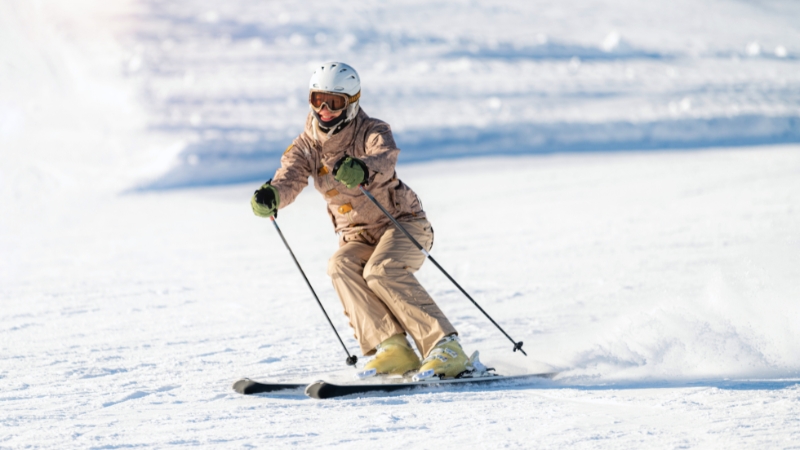
Skiing often gets filed under recreation. A fun winter escape. Fresh air, mountain views, and social time on lifts. Fitness sometimes feels like a side effect rather than the point. That framing sells the sport short.
Skiing places real demands on the body. Long stretches of leg loading. Repeated spikes in heart rate. Constant balance corrections on uneven, shifting surfaces.
Enough eccentric muscle work to leave even well-trained athletes sore the next day. None of that is accidental or trivial.
What skiing gives back depends on how you ski, how long you stay on the snow, and how well you manage fatigue. Alpine skiing, cross-country skiing, and ski touring look similar from a distance, yet they stress the body in very different ways.
Knowing those differences helps turn a ski day into a legitimate part of a fitness routine rather than a pleasant detour. Let’s get into the details.
Highlights
- Skiing delivers real cardiovascular, strength, and balance benefits when time, terrain, and intensity are managed deliberately.
- Different ski disciplines stress the body in distinct ways, from interval-style downhill skiing to full aerobic load in cross-country and touring.
- Eccentric leg strength, balance, and fatigue management are central to both performance and injury reduction.
- Preparation for snow, pacing on snow, and respecting cold and altitude determine whether skiing functions as training or just recreation.
Skiing as a Real Training Stimulus
Skiing can function as exercise with purpose, not just movement that happens to burn calories. The physiology supports it.
- Sustained muscular tension, especially in the quadriceps and glutes
- Repeated elevations in heart rate during runs
- High demands on balance, coordination, and joint control
- Significant eccentric loading during turns and speed control
Soreness after skiing is not a sign of poor conditioning alone. It reflects the type of muscle work involved.
Skiing asks muscles to absorb force over and over, especially while controlling descent. That pattern shows up in strength training only when eccentric work is deliberately emphasized.
The payoff varies by discipline, terrain, pace, and volume. A short alpine session with long lift lines will not match the physiological stress of a full day of continuous movement.
A steady ski touring climb looks far more like classic endurance training. Treat skiing as a spectrum of sports rather than one activity.
Types of Skiing and Why They Matter for Fitness
Most conversations about skiing for fitness blend three different disciplines. Each carries distinct benefits and limits.
Alpine (Downhill) Skiing
View this post on Instagram
According to the Frontiers research, alpine skiing consists of short to moderate bursts of effort followed by recovery on lifts. The physical demands include:
- Heavy leg loading during turns
- Repeated eccentric braking by the quadriceps
- Isometric and dynamic trunk control
- Technical coordination at speed
The cardiovascular response tends to be intermittent. Heart rate rises during a run, drops on the lift, then rises again. Over a full day, that pattern resembles interval training layered on top of muscular fatigue.
Alpine skiing shines for strength endurance, balance, and leg resilience, especially when days are long and terrain requires sustained control rather than reckless speed.
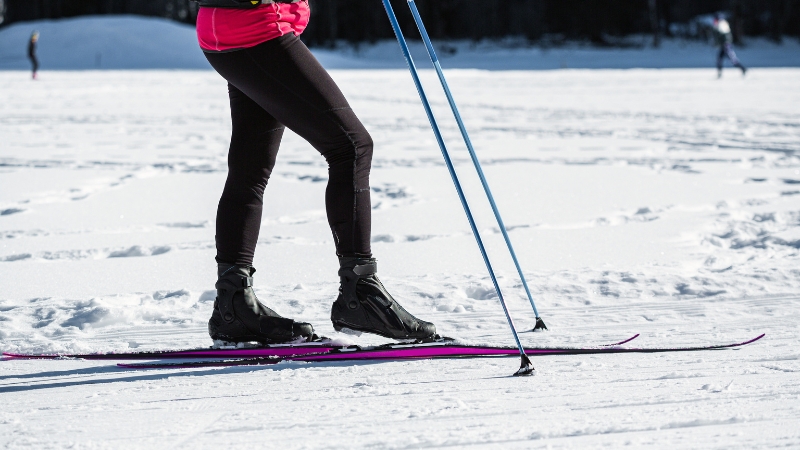
Cross-Country Skiing
Research shows that cross-country skiing operates at the opposite end of the spectrum. It is continuous, full-body aerobic work that can reach very high oxygen demands.
- Large muscle mass involvement
- Sustained elevated heart rate
- High energy expenditure
- Strong demands on coordination and rhythm
Population-level research links regular cross-country skiing participation with lower cardiovascular disease risk and reduced all-cause mortality. Improved cardiorespiratory fitness and favourable changes in blood pressure, glucose, and lipid profiles offer plausible explanations.
Long events deserve respect. Very long races can temporarily raise acute risk during the effort itself, as seen with many endurance sports. Gradual build-up and conservative pacing matter.
Ski Touring and Mountaineering
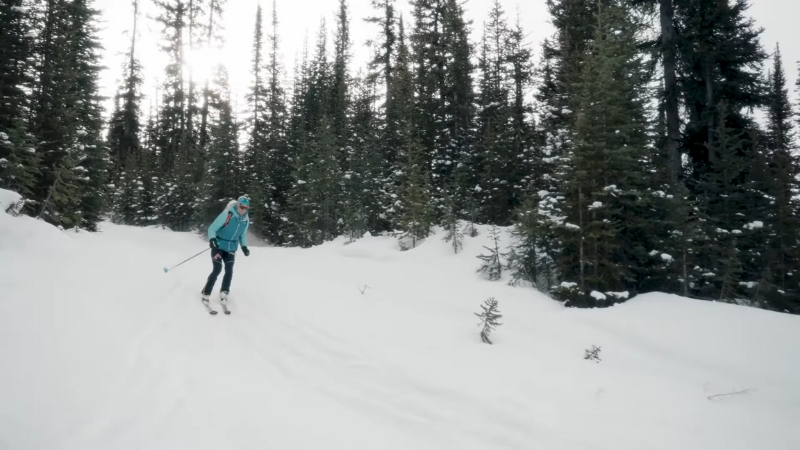
Ski touring blends uphill endurance with downhill eccentric loading.
- Long, steady aerobic climbs
- Weight-bearing movement at altitude
- Descents that tax fatigued legs
Touring offers one of the most complete skiing fitness profiles. The aerobic load develops endurance, while the descents reinforce strength, endurance, and control under fatigue.
For many recreational athletes, touring provides the most direct transfer to general fitness, provided technical skill and safety knowledge are adequate.
Cardiovascular Fitness on Snow
Cardiovascular demand on snow looks different than most gym or road-based workouts. Terrain, cold air, altitude, and stop-start movement all shape how the heart and lungs respond during a ski day.
Alpine Skiing and Interval-Like Cardio
@travelwithmajaa this is therapy for your heart❤️🩹 #skiing #skiingtiktok #skiingvideos #skiingislife #therapy #therapytiktok #winter #wintervibes #heals #heal #healing #thegoodplace #foryou #fördig #fordig #fypシ #travelwithmajaa #skiseason #säsong #skidsäsong #trending #goodformysoul #goodforhealth #trysil #trysilfjellet #trysilnorway #norway #eqpe ♬ End of beginning by djo – Toria
Downhill skiing rarely resembles steady-state cardio. It functions more as repeated intervals layered onto muscular work.
Field measurements in recreational skiers show heart rate and blood pressure rise during runs while remaining within safe limits for many populations when the pace is appropriate.
That supports alpine skiing as part of an active lifestyle, especially when volume is sufficient.
Two factors determine whether alpine skiing contributes meaningfully to cardiovascular fitness:
- Total time actively skiing, not total time at the resort
- Terrain choice, which influences effort and perceived exertion
A few fast runs followed by long breaks do little. Multiple sustained runs with minimal standing around change the equation.
Cross-Country Skiing and Aerobic Capacity
Cross-country skiing ranks among the most aerobically demanding sports measured. Oxygen consumption can rival or exceed that seen in cycling or running at similar effort levels.
That intensity explains why cross-country athletes show exceptional cardiovascular fitness and why recreational participation correlates with long-term health benefits.
The key is pacing. Cold air, altitude, and long durations amplify stress on the heart and lungs. Build gradually and respect recovery.
Cold and Altitude Effects
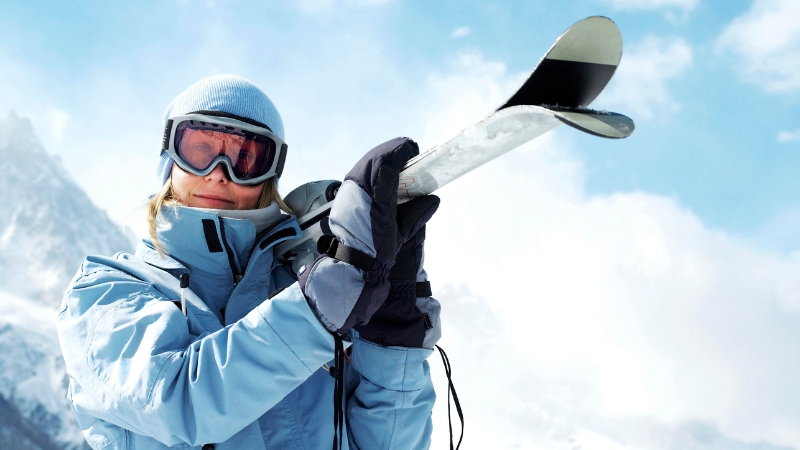
Skiing often takes place in cold environments and at moderate altitudes, both of which affect cardiovascular strain.
Cold exposure can increase blood pressure and heart workload. Altitude reduces oxygen availability. Heavy clothing and equipment add further load.
People with asthma, heart disease, or circulation issues should approach early ski days as a return to training, not a test of limits, as per Mayo Clinic. Slower starts and longer warm-ups reduce risk.
Also, bright snow and high-altitude sun add visual strain, which is why many skiers rely on polarized sunglasses during spring conditions or long lift rides.
Strength and Muscular Endurance Gains
Strength gains from skiing show up quietly and accumulate fast. Long turns, sustained stance, and repeated braking force the legs and trunk to work without relief.
Over full days on snow, that demand builds muscular endurance that traditional gym sessions often miss.
The Role of Eccentric Strength
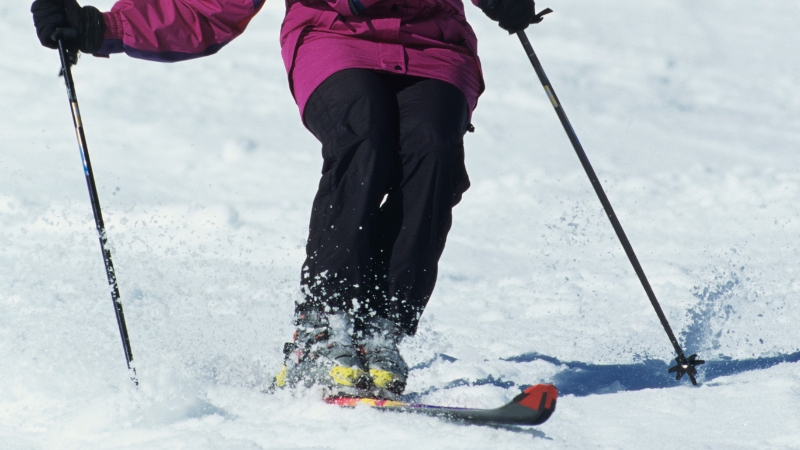
A defining feature of alpine skiing is eccentric muscle work. The quadriceps and glutes repeatedly resist gravity while controlling speed and direction.
Research on recreational skiing shows prolonged eccentric fatigue in the quadriceps and hamstrings after ski days. Fatigue affects performance and safety.
As eccentric control declines:
- Knee and hip alignment become less stable
- Turn quality degrades
- The risk of catching an edge or collapsing increases
Building eccentric strength before the season pays dividends on snow.
Effective eccentric-focused exercises include:
- Slow tempo squats with controlled lowering
- Split squats emphasize descent
- Step-downs from a box
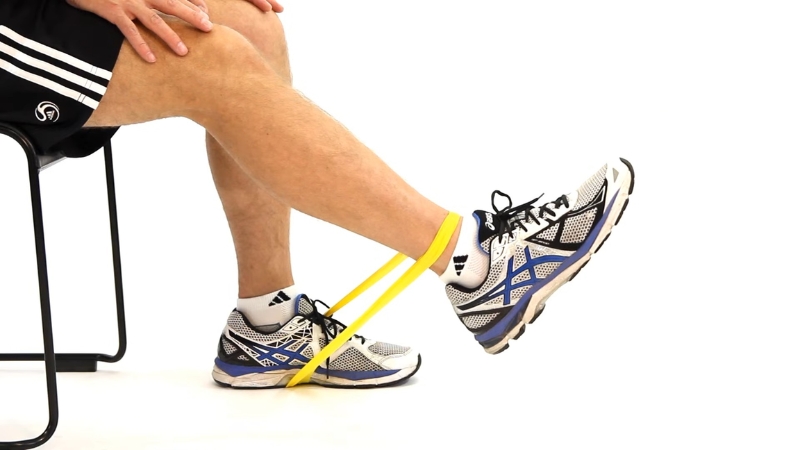
- Hamstring eccentrics, such as Nordic variations or slow hinge lowering
Trunk and Hip Demands
Skiing challenges more than legs. Staying balanced over skis requires constant trunk stiffness and hip stability.
Even recreational skiers manage:
- Resistance to unwanted rotation
- Pelvic control while legs move independently
- Postural alignment under changing forces
Pole use adds upper-body endurance demands, particularly in longer days, moguls, touring, or cross-country sessions.
Balance, Coordination, and Joint Control
Skiing forces continuous micro-adjustments. Edge pressure shifts. Ankles and knees align dynamically. Weight transfers laterally under load.
That environment trains balance under realistic conditions. Fatigue, however, degrades postural control. Studies confirm measurable changes in balance-related variables later in ski sessions, matching common skier experience.
Off-snow neuromuscular training links strongly to improved control and injury risk reduction in sport. Given the prevalence of knee injuries in skiing, that connection matters.
Useful balance and control drills include:
- Single-leg balance with head turns
- Lateral hops with controlled landings
- Single-leg hinge patterns
- Anti-rotation core work, such as Pallof presses
Energy Expenditure and Calorie Burn
Calorie burn in skiing varies widely based on skill, terrain, speed, and active time. Lift rides do not count as movement.
Using standardized MET values provides a useful reference.
| Activity | METs | Calories per hour at 70 kg | Calories per hour at 90 kg |
| Downhill skiing, active time | 4.3 | ~301 | ~387 |
| Cross-country skiing, skating | 13.3 | ~931 | ~1,197 |
| Cross-country skiing, racing | 15.0 | ~1,050 | ~1,350 |
| Ski mountaineering, uphill | 15.5 | ~1,085 | ~1,395 |
Downhill figures reflect active skiing only. Daily totals depend on how much time is spent moving versus waiting.
Comparative studies suggest roughly 2.5 hours of alpine skiing may be needed to match the energy expenditure of one hour of cross-country skiing, though conditions matter.
For alpine skiers seeking conditioning benefits, volume remains the simplest lever.
Structuring an Alpine Ski Day for Fitness
@loicmeillard Early morning warm up 🙆🏽♂️☀️ #warmup #sunrise #foryou #alpineskiing ♬ Snow (Hey Oh) Part1 – Red Hot Chili Peppers
A ski day can drift toward underload or overload. Structure helps avoid both.
On-Snow Intensity Framework
Use perceived exertion rather than heart rate alone, since cold, altitude, and lift breaks distort heart rate signals.
Warm-up Block, 15 to 25 Minutes
- Easy groomers
- Longer turns
- Focus on position
Main Block, 60 to 120 Minutes of Active Skiing
- Alternate focused runs with easier runs
Focused Run
- RPE 7 to 8 during the run
- Full recovery on the lift
Easy Run
- RPE 4 to 6
- Technique emphasis
Late in the day, degraded technique signals time to slow down or stop.
Cold-Appropriate Warm-Up
A simple warm-up that works in ski boots:
- 1 to 2 minutes brisk walking
- 10 controlled bodyweight squats
- 10 lateral lunges total
- 20 seconds plank or standing brace
- First run at an easy, conversational pace
Off-Snow Training That Transfers to Skiing
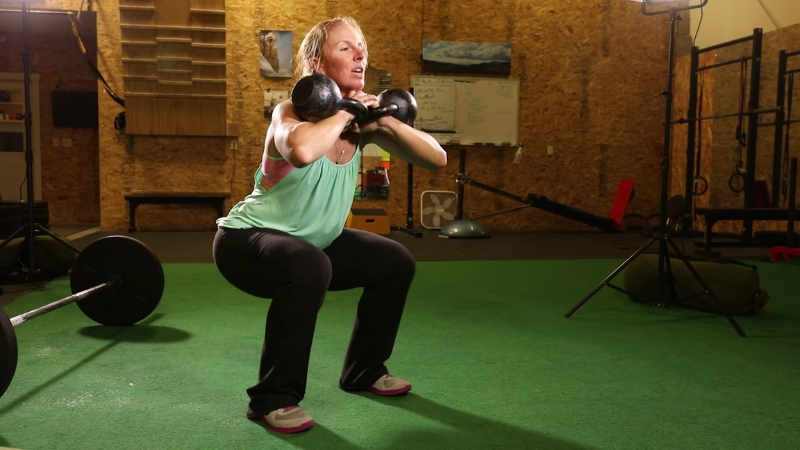
Fitness improvements from skiing improve when preparation matches demands.
General activity guidelines consistently recommend aerobic work, muscle strengthening, and balance training across the week. Skiers benefit from all three.
Six-Week Fit-to-Ski Template
| Day | Focus | Content |
| 1 | Strength A | Squat, hinge, anti-rotation core |
| 2 | Aerobic base | 30 to 60 minutes easy |
| 3 | Balance and mobility | Single-leg work, hips, ankles |
| 4 | Strength B | Unilateral and eccentric emphasis |
| 5 | Intervals, optional | Short hills or bike intervals |
| 6 | Rest or light walk | Easy movement |
| 7 | Rest | Full rest |
Strength Session Outlines
Strength work two or more days per week aligns with health recommendations and ski performance needs.
Strength A:
- Squat or goblet squat, 3 sets of 6 to 10
- Romanian deadlift, 3 sets of 6 to 10
- Lateral lunge, 2 to 3 sets of 8 per side
- Pallof press, 2 to 3 sets of 10 per side
- Calf raises, 2 sets of 12 to 20
Strength B:
- Split squat with slow lowering, 3 sets of 8 per side
- Step-downs, 3 sets of 6 to 10 per side
- Hamstring eccentrics, 2 to 3 sets
- Side plank, 2 sets of 20 to 40 seconds
- Row or pull, 2 to 3 sets of 8 to 12
Conditioning for Recovery Capacity
For downhill skiers, aerobic conditioning supports recovery between runs and days rather than long-duration endurance.
Options include:
- Easy zone 2 sessions, 30 to 60 minutes
- Short intervals, 30 to 60 seconds hard with full recovery
- Hill walking for a steady uphill load
Injury Risk and Practical Reduction
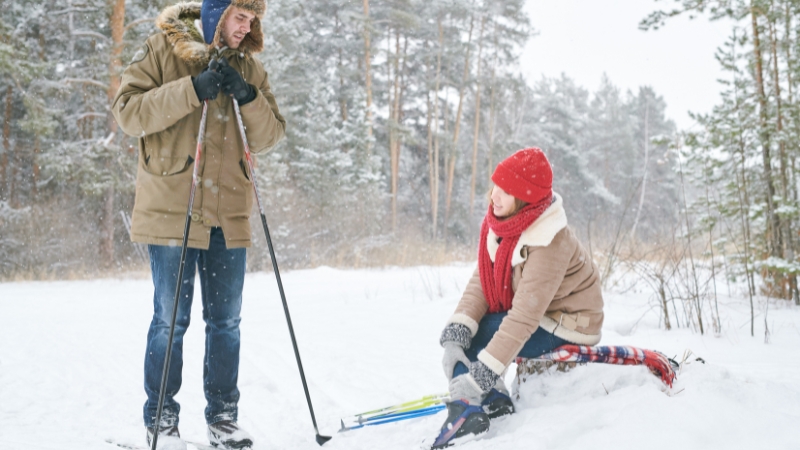
Injury rates in recreational alpine skiing typically fall around 1 to 2 injuries per 1,000 skier days, depending on setting and definitions.
The most controllable factors include:
- Fatigue management
- Speed selection
- Technique
- Equipment fit
- Protective gear
Fatigue as a Primary Risk Variable
Eccentric fatigue accumulates across the day. Late-day mistakes often reflect neuromuscular decline rather than poor judgment.
Risk-reducing habits:
- Ski challenging terrain earlier
- Stop when the turns lose consistency
- Treat the first day of a trip as a ramp
Helmets and Realistic Expectations
Evidence supports helmet use for reducing head injury risk and severity. No helmet eliminates concussion risk. Proper fit, certification, and replacement after major impacts matter.
Knee and ACL Protection
Neuromuscular training improves control and movement quality, factors linked to lower injury risk.
High-value preparation focuses on:
- Unilateral strength
- Hip stability
- Controlled landings
- Trunk stiffness under rotation
Who Benefits Most and Who Needs Caution
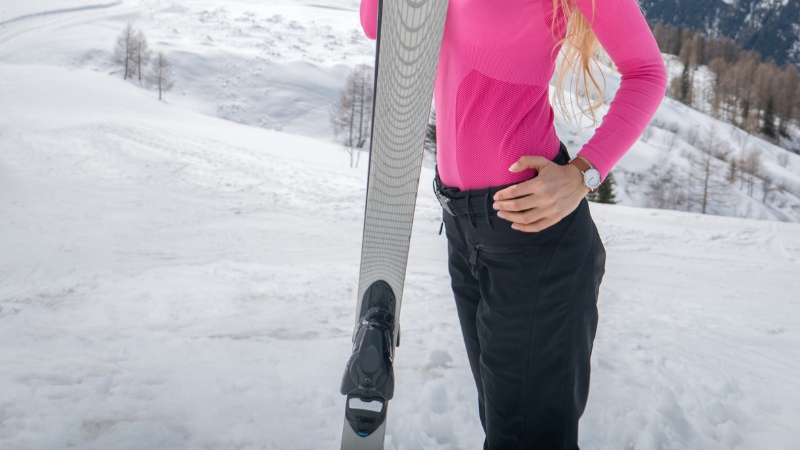
Fitness and Healthy Aging
Downhill skiing appears in reviews as a sport that supports cardiovascular, neuromuscular, and psychosocial health. Observational work links participation with higher health-related quality of life in older adults.
Higher-Risk Groups
People with known cardiovascular or respiratory disease require conservative ramping and, in some cases, medical clearance for cold-weather exertion.
Endurance events deserve special care. Acute risk rises during long races even when long-term participation correlates with better outcomes. Fitness builds over time, not in one effort.
Bottom Line
View this post on Instagram
Skiing supports cardiovascular fitness, strength endurance, balance, and coordination when volume and intensity are managed deliberately. Cross-country skiing and touring act as direct endurance builders.
Downhill skiing delivers eccentric-heavy leg work with interval-style cardiovascular stress that accumulates across long days.
Combine aerobic training, strength work, and balance practice off snow. Ramp cautiously in cold and high altitude.
Treat fatigue as a signal, not a challenge. Under those conditions, skiing earns its place as a legitimate fitness tool rather than a pleasant coincidence.