
You work out consistently. You eat well. You sleep (mostly). And yet, somewhere between the gym and the grocery store, you feel it, that unsettling head rush when you stand up too fast, the sudden wave of fatigue mid-afternoon, the lightheadedness that comes out of nowhere.
You brush it off. You’re healthy, after all. But if you’re an active woman, there’s a real possibility that low blood pressure is quietly running the show, and it’s doing it in ways that are uniquely shaped by your biology.
Here’s something that surprises a lot of people: low blood pressure, or hypotension, is not just a problem for the sedentary or the elderly. In fact, it disproportionately shows up in physically active women, and the reasons why go far deeper than just “you’re fit.”
We’re talking hormones, nervous system wiring, exercise physiology, and a condition that affects an estimated 1 to 3 million Americans, the overwhelming majority of whom are young women.
Your Body Is Already Running Lower, And That’s Not a Coincidence
Before getting into what goes wrong, it helps to understand the baseline. Women, on average, naturally run at lower blood pressure than men, and this isn’t random.
Researchers have traced it to the parasympathetic nervous system, the branch of your autonomic nervous system responsible for “rest and digest” functions, including lowering blood pressure and reducing heart rate. Women have more active parasympathetic nervous systems than men, which means their blood pressure naturally sits lower across the board.
This matters because when you layer exercise on top of an already-lower baseline, the gap between “normal” and “symptomatic” gets smaller. A reading that would be unremarkable in a man might leave a woman feeling dizzy, foggy, and drained.
Add to that the fact that hormones fluctuate throughout the month, and you have a system that’s constantly in flux. Estrogen and progesterone directly affect blood vessel tone, causing vessels to relax and widen, which drops vascular resistance and can pull readings down by 5 to 15 mmHg during certain phases of the menstrual cycle.
Blood pressure tends to dip in the days after ovulation and during menstruation itself, according to research published in PubMed. For active women who are also sweating out fluids during training, this creates a double-down effect.
What Actually Counts as Low, and When It Becomes a Problem
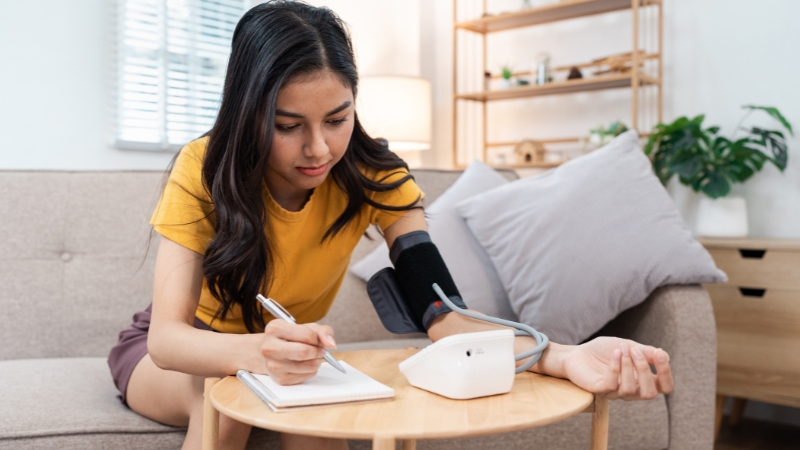
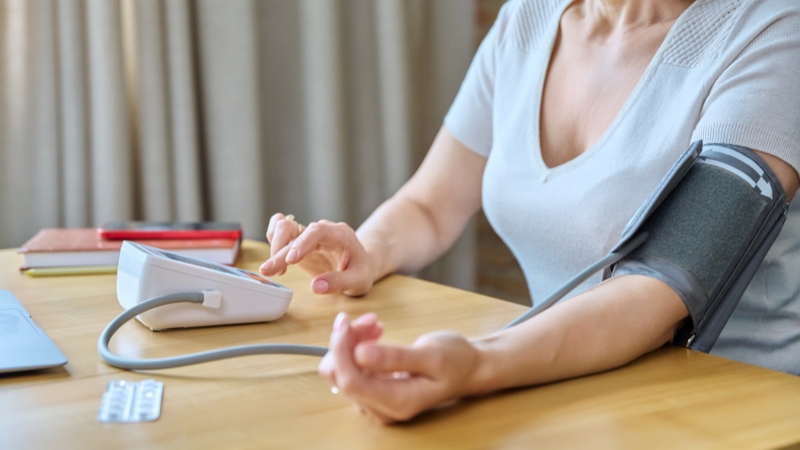
The standard clinical cutoff for hypotension is below 90/60 mmHg. But for women, that number doesn’t tell the whole story. A reading of 88/58 in a woman who feels perfectly fine is very different from the same reading in a woman who is fainting every time she stands up.
That is why the meaning of the low BP range for women is more nuanced than a single cutoff. In practice, what matters is how low the reading is, whether symptoms are present, and how well the body still maintains circulation.
Here’s how the range breaks down in practice:
Blood Pressure Level
Reading (mmHg)
What It Usually Means for Women
Normal
90–120 / 60–80
Healthy range; aim here
Mild Hypotension
80–90 / 50–60
Often asymptomatic; common in very fit women
Moderate Hypotension
70–80 / 40–50
May trigger dizziness, brain fog, fatigue
Severe / Dangerous
Below 70 / 40
Risk of organ underperfusion; seek care
Orthostatic Drop
≥20 mmHg systolic drop on standing
Signals orthostatic hypotension; needs attention
A crucial nuance: orthostatic hypotension, defined as a drop of 20 mmHg or more in systolic pressure (or 10 mmHg diastolic) within three minutes of standing, is actually more common in women than men.
About 80% of POTS patients are women, and vasovagal syncope (the fancy term for fainting triggered by a drop in BP and heart rate) affects females more frequently across all age groups.
So when your vision goes spotty after jumping off the treadmill, or you feel like you might pass out after a hot yoga class, that’s not weakness, that’s physiology.
The Fitness Paradox: Why Being Active Can Make It Worse
View this post on Instagram
Here’s the counterintuitive part. You’d think that regular exercise would protect against blood pressure problems. And in many ways, it does; over time, cardio training makes your heart more efficient and helps regulate blood pressure beautifully.
But in the short term, and in specific conditions, being very physically active can actually amplify low BP symptoms in women.
Why? Several reasons stack on top of each other.
Sweat and blood volume. During a two-hour training session, athletes can lose 2 to 3 percent of their body weight in water.
That fluid loss directly reduces blood volume, and less blood volume means lower pressure. For women, who already tend to have smaller hearts and lower baseline blood volume than men, this drop hits harder.
The post-exercise crash. After intense exercise, blood vessels in your muscles remain dilated for a significant period.
Your heart is pumping hard to circulate blood, but when you stop suddenly, especially in a warm environment, blood pools in the lower body. The result is that classic post-workout head rush or faint feeling that many active women know too well.
Heat exposure. Heat causes blood vessels to dilate further, compounding the pooling effect. Hot environments (hot yoga studios, summer runs, heated pools) are particularly common triggers for symptomatic hypotension in active women.
Tall stature is a risk factor. This is a surprising one backed by research: taller individuals have a harder time returning blood from the legs to the heart against gravity. Gene association studies have found that height increases the risk of circulatory problems, and many female athletes tend to be taller than average.
POTS: The Condition Hiding Behind “Just Being Tired”
No discussion of low blood pressure in active women is complete without talking about Postural Orthostatic Tachycardia Syndrome (POTS). And this is where things get genuinely startling.
POTS is a disorder of the autonomic nervous system in which standing up causes the heart rate to spike by at least 30 beats per minute in adults (40 in teens), without a corresponding drop in blood pressure that would be classified as classic orthostatic hypotension.
Blood pools in the lower body instead of circulating back up, and the heart races to compensate. Symptoms include dizziness, brain fog, palpitations, extreme fatigue, blurred vision, nausea, and, yes, exercise intolerance that can be profoundly disabling.
It affects an estimated 1 to 3 million Americans. And it overwhelmingly strikes women aged 15 to 45.
What’s particularly striking is the pattern that doctors have been noticing in recent years: young, highly trained female athletes are developing POTS at a disproportionate rate.
Neurologists and cardiologists who specialize in the condition have observed that women of childbearing age represent a strikingly high percentage of cases, likely because they are more frequently in pro-inflammatory states (during menstrual cycles and pregnancy) that may prime the immune system to malfunction in ways that affect autonomic regulation.
There’s also a structural angle. Research has shown sex-specific differences in heart size even in healthy populations, and these differences are amplified in POTS. It’s possible that women born with hearts on the smaller end of the normal range are simply more susceptible when other risk factors line up.
Here’s what the symptom overlap looks like in practice, and why it’s so easy to miss:
POTS / Low BP Symptom
Often Mistaken For
Red Flag: It’s Circulatory
Persistent fatigue
Overtraining, poor sleep
Worse after standing; better lying down
Brain fog
Stress, hormones
Occurs specifically upright, clears when recumbent
Exercise intolerance
Deconditioning
Can’t sustain effort despite being trained
Dizziness on standing
Dehydration
Consistent, not just occasional
Racing heart after standing
Anxiety
Heart rate jumps 30+ bpm within 10 min of standing
Lightheadedness after a meal
Blood sugar swings
Occurs reliably 30–60 min post-eating
The diagnostic delay for POTS is notoriously long, often several years, partly because symptoms are dismissed as anxiety, deconditioning, or “just stress.” For active women, especially, the assumption that physical fitness rules out a circulatory disorder has cost people years of appropriate treatment.
The Hormonal Wildcard
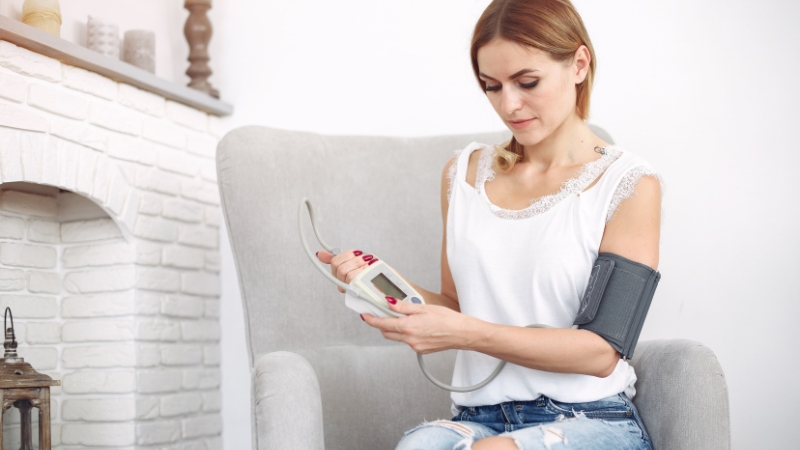
Even without POTS, the menstrual cycle creates a moving target when it comes to blood pressure for active women. Research is still working to fully map this relationship, but what we know is meaningful.
Blood pressure is generally highest at the onset of menstruation and tends to dip in the follicular phase (roughly days 1 to 14) and through the luteal phase. The hormone progesterone, which rises after ovulation, has a vasodilating effect, relaxing blood vessel walls and pulling pressure down.
During pregnancy, this effect is even more pronounced: systolic pressure can drop 5 to 15 mmHg in early pregnancy as progesterone and relaxin open the vasculature wide.
The practical implication? An active woman may feel perfectly fine exercising at one point in her cycle and genuinely awful at another, not because she’s weaker or less motivated, but because her circulatory system is operating with less pressure to work with.
This is especially relevant for athletes who train at the same intensity regardless of where they are in their cycle, without accounting for the underlying cardiovascular shifts.
Menopause adds another chapter. The menopause transition can push blood pressure either up or down, depending on timing and individual factors. Women who experience menopause earlier and/or are white are more likely to see a blood pressure drop during this transition, according to research from Parsley Health.
What You Can Actually Do About It
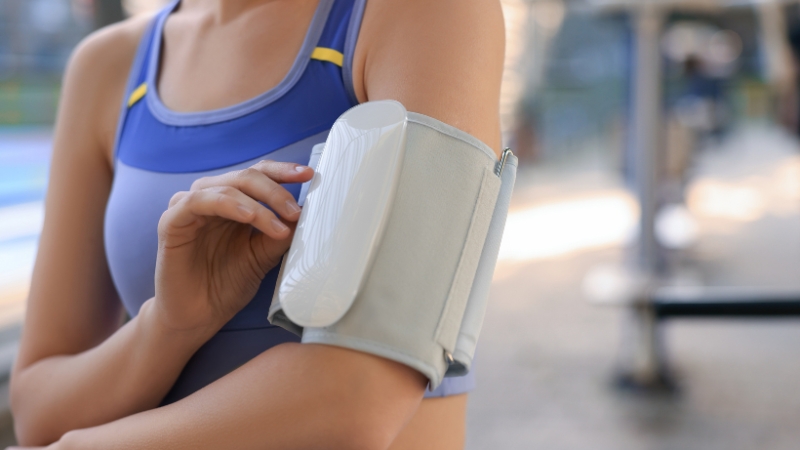
The good news: most cases of low blood pressure in active women, even significant ones, respond well to targeted lifestyle changes. Medication exists for severe cases, but for many women, the following strategies move the needle substantially.
Hydration is the first and most powerful lever. Blood volume is directly tied to fluid intake. Even modest dehydration reduces blood volume and drops pressure.
Drinking 16 ounces of water with electrolytes before exercise has been shown to temporarily raise blood pressure enough to meaningfully reduce symptoms. Sodium is especially important; it helps retain fluid and expand blood volume. If you’re a heavy sweater, you likely need more sodium than you think.
Compression garments are underrated. Compression socks rated 20 to 30 mmHg reduce blood pooling in the legs by squeezing veins and pushing blood back toward the heart.
Research on POTS specifically has found that full lower-body compression, covering calves, thighs, and lower abdomen, is the most effective configuration.
For active women, wearing them post-workout (when vasodilation is maximal) can prevent that post-exercise crash.
How you move matters. Standing up slowly isn’t just for elderly people; it’s genuinely important for any woman with orthostatic hypotension. Before getting out of bed or off the floor, doing a few leg pumps (flexing and extending feet and ankles) pushes blood back toward the heart before gravity gets involved.
The “Dutch leg-crossing maneuver”, crossing one foot in front of the other and squeezing the thighs and glutes together, has been shown in research to restore venous return, increase cardiac output, and raise mean arterial pressure when standing.
Nutrition timing around training. Blood pressure naturally dips after eating (postprandial hypotension) as blood rushes to the digestive system.
For women already running low, training right after a meal, especially a large one, can compound the effect. Spacing out meals and exercise, and keeping training-time meals smaller, helps.
Exercise type matters too. For women with significant hypotension or POTS symptoms, recumbent or semi-recumbent exercise (rowing, cycling, swimming) is better tolerated than upright exercise because water pressure and horizontal position reduce the gravitational pooling effect.
The goal is to gradually build cardiovascular conditioning without repeatedly triggering symptomatic drops.
Strategy
Why It Works
Best For
Sodium + fluid loading pre-exercise
Expands blood volume
All active women with low BP
Compression garments post-workout
Reduces venous pooling
Post-exercise crashes, POTS
Slow positional changes + leg pumps
Prevents orthostatic drops
Morning dizziness, post-exercise
Recumbent exercise
Reduces gravitational load
Significant symptoms or POTS
Smaller, frequent meals
Limits postprandial dips
Women who crash after eating
Menstrual cycle-aware training
Accounts for hormonal pressure shifts
Cycle-dependent symptom patterns
The Bottom Line
@aprokodoctorAprokoNation, this “Hebrew woman” pressure has sent too many women to their early grave. Oya watch this video and learn the real reasons doctors recommend it.
Low blood pressure in active women isn’t a paradox; it’s a predictable outcome of biology, hormones, and exercise physiology intersecting in ways that medicine is still catching up to understand. The parasympathetic nervous system runs hotter in women.
Hormones move the goalposts monthly. Exercise dilates vessels and depletes fluid. And a condition like POTS can sit beneath all of it, undiagnosed for years, while a woman is told she just needs more rest.
If you’re an active woman who regularly experiences dizziness on standing, post-workout crashes, persistent fatigue despite good sleep, or brain fog that lifts when you lie down, these are worth taking seriously. They’re not signs that you’re doing fitness wrong. There are signs that your circulatory system is asking for specific kinds of support.
Track your symptoms relative to your cycle. Experiment with electrolytes and hydration. Try compression. Move slowly between positions. And if symptoms are significant or persistent, find a clinician familiar with dysautonomia and women’s cardiovascular health.
Getting the right framing, that this is a circulatory issue, not a motivation issue, is often the first thing that actually helps.