
Pilates works unusually well at home. The method asks for control rather than chaos, awareness rather than impact, and strength built through alignment instead of brute force.
A mat and a little floor space cover most needs. That simplicity explains why Pilates keeps showing up in clinical guidance and public health discussions around posture, balance, flexibility, and joint-friendly strength work.
A 20-minute format fits real life. Short sessions remove the friction that stops people from starting. At the same time, 20 minutes allows enough room to address the core, hips, upper body, and spine in a single pass. Consistency matters more than marathon workouts, and shorter routines tend to stick.
The guide below lays out a complete, structured full-body Pilates routine designed specifically for home practice. In every section, you will find an explanation of how to move, why the movement matters, and how to adjust when the body asks for a lighter approach. Let’s get started.
What “Full-Body” Means in Pilates Terms
A true full-body Pilates session touches several systems rather than isolating single muscles.
Core and Trunk Stability
Deep abdominal muscles, spinal stabilizers, pelvic floor, and hips work together. The goal centers on steady movement and balance rather than visible muscle tension.
Hips and Legs
Glutes, hamstrings, inner thighs, and hip abductors support walking, standing, and daily transitions like sitting down or climbing stairs.
Upper Body Support
Shoulders, upper back, and arms provide stability during planks, quadruped work, and prone exercises. Scapular control protects the neck and shoulders during load-bearing positions.
Spine Mobility and Posture
Pilates encourages controlled flexion, extension, and rotation while maintaining alignment. Postural awareness remains present throughout the session.
Harvard Health’s research highlights that balance and flexibility improvements can be achieved with Pilates-style training, including in older adults. Balance gains, in particular, carry clear real-world value for fall prevention and everyday confidence.
Before You Start (Setup, Equipment, and Safety)
A few simple setup choices and basic safety checks can make home Pilates feel smoother, safer, and far more effective from the very first session.
Basic Setup
- Surface: Yoga mat or carpeted floor
- Optional props: Small pillow or folded towel for neck support, yoga block between knees, light resistance band for later progressions
- Space: Enough room to fully extend arms and legs
Safety Filters for Home Practice
Pilates should feel challenging but never sharp or alarming. Stop or modify if any of the following show up:
- Sharp spinal pain during curling or extension
- Symptoms radiating down an arm or leg
- Dizziness, uncontrolled breath holding, or pelvic pressure that feels off
People returning from injury or managing health conditions benefit from professional guidance and conservative modifications while building tolerance.
Form Cues That Matter More Than Extra Reps
View this post on Instagram
Good form carries more value than piling on repetitions, especially in Pilates, where breath, alignment, and controlled tension determine whether the work builds strength or simply adds fatigue.
Breathing
Breathing supports trunk stability and movement control.
- Inhale to prepare
- Exhale during the hardest part of the movement
Avoid bracing so hard that breathing stops.
Core Engagement Without Over-Bracing
Picture a gentle zipper drawing the waist inward and upward. Stability matters; stiffness does not.
Core training guidance often emphasizes coordinated muscle support for daily movement, which matches the Pilates approach.
Alignment Checkpoints
- Ribs stacked over pelvis
- Neck long, shoulders away from ears
- Shoulder blades stable rather than squeezed
- Hips level during bridging and side work
The 20-Minute Full-Body Pilates Routine
Time-based structure works well at home. Move slowly, stay controlled, and prioritize quality. Repetition ranges of 6 to 10 per side suit most movements.
Routine Overview
| Time | Exercise | Primary Focus | Home Modification |
| 0:00 to 2:00 | Breathing + pelvic tilts | Core connection, spinal awareness | Smaller range |
| 2:00 to 4:00 | Cat-cow to neutral + shoulder prep | Spine mobility, shoulder control | Forearms if wrists dislike load |
| 4:00 to 6:30 | Bridge progressing to march | Glutes, hamstrings, trunk stability | Both feet down |
| 6:30 to 9:00 | Dead bug or toe taps | Deep core control | Bent knees |
| 9:00 to 11:00 | Side-lying leg series | Hip stability | Bottom knee bent |
| 11:00 to 13:00 | Swimming prep | Posterior chain, upper back | Arms or legs only |
| 13:00 to 15:30 | Plank pattern | Shoulders, core, total-body tension | Incline plank |
| 15:30 to 18:00 | Side plank | Obliques, hips, shoulder stability | Knees down |
| 18:00 to 20:00 | Spine stretch + hip opener | Mobility, downshift | Reduced range |
0:00 to 2:00: Breathing and Pelvic Tilts
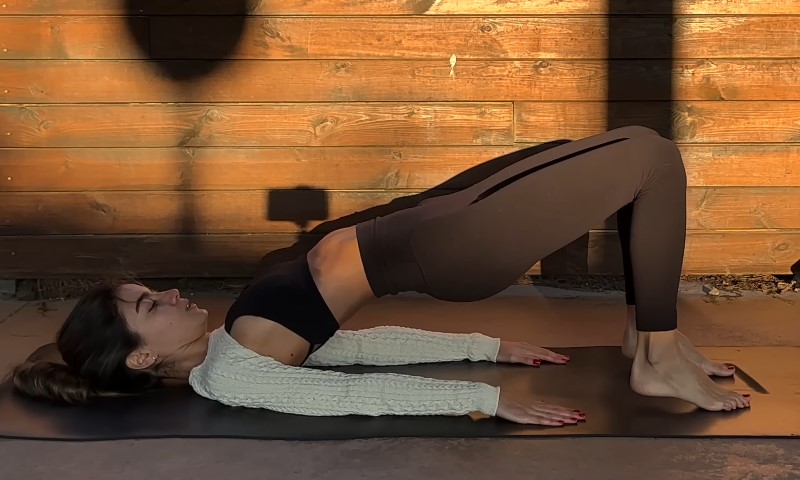
This opening segment eases the body into movement by building breath control and gentle spinal awareness before any strength work begins.
Start Position
Lie on your back with knees bent and feet hip-width apart. Place hands on ribs or pelvis.
Breathing Drill
Inhale through the nose, allowing ribs to expand. Exhale and gently draw the ribs downward, as if closing a zipper from the pelvis toward the navel.
Pelvic Tilts
On exhale, flatten the lower back lightly into the mat. Inhale back toward neutral. Perform 6 to 8 slow cycles.
Why It Matters
Spinal awareness sets the foundation for controlled movement. Coordinated core function supports stability across daily tasks and larger exercises.
2:00 to 4:00: Cat-Cow to Neutral and Shoulder Prep
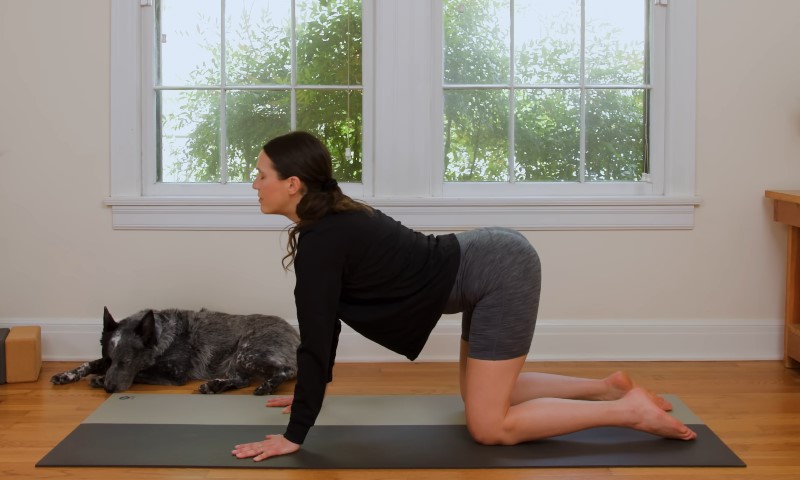
This short sequence gently wakes up the spine and shoulders, helping the body settle into better alignment before more demanding strength work begins.
Cat-Cow
From hands and knees, inhale into gentle spinal extension. Exhale into spinal rounding. Return to neutral and pause.
Shoulder Prep
Remain in quadruped. Keep elbows straight while allowing shoulder blades to glide together slightly, then push the floor away. Movement stays subtle.
Reps
4 cat-cow cycles, 6 shoulder blade reps.
Modification
Use forearms or fists if wrist discomfort appears.
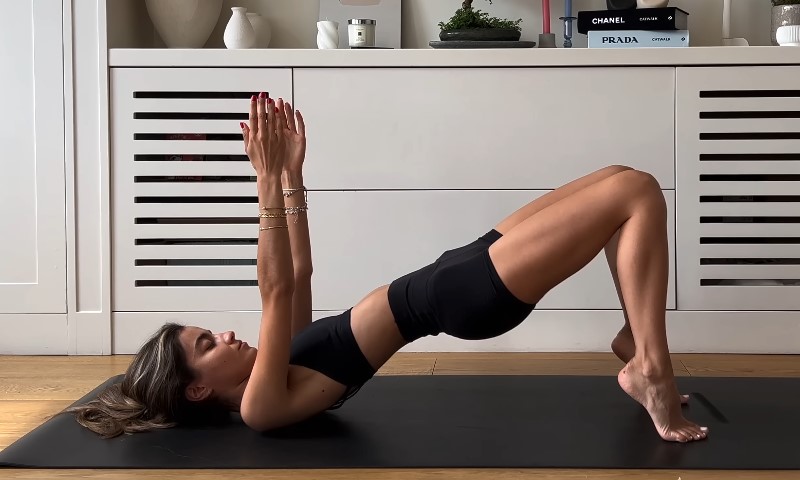
4:00 to 6:30: Bridge With Optional March
This segment builds lower-body strength and pelvic stability using controlled bridging, with an optional marching variation that challenges balance without adding impact.
Bridge
Lie on your back with feet planted. Exhale to lift hips while keeping ribs drawn down. Inhale briefly at the top. Lower slowly.
Perform 8 controlled reps.
Bridge March Option
Hold the bridge position. Exhale to lift one knee slightly without hip drop. Inhale to set it down. Alternate sides for 6 total marches.
Why It Matters
Bridging strengthens the posterior chain and reinforces pelvic stability, a key contributor to balance and confident movement.
6:30 to 9:00: Dead Bug or Toe Taps
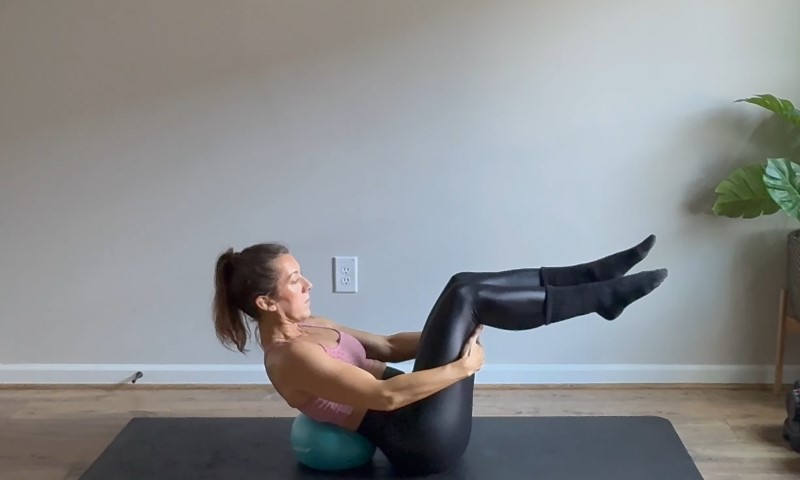
Choose based on current control and comfort.
Toe Taps
Bring legs into tabletop. Exhale to lower one foot toward the floor while keeping the pelvis steady. Inhale back. Alternate for 8 total taps.
Dead Bug
Extend opposite arm and leg away from center on exhale. Inhale to return. Alternate for 6 total reps.
Form Check
Reduce range if the lower back arches or ribs flare.
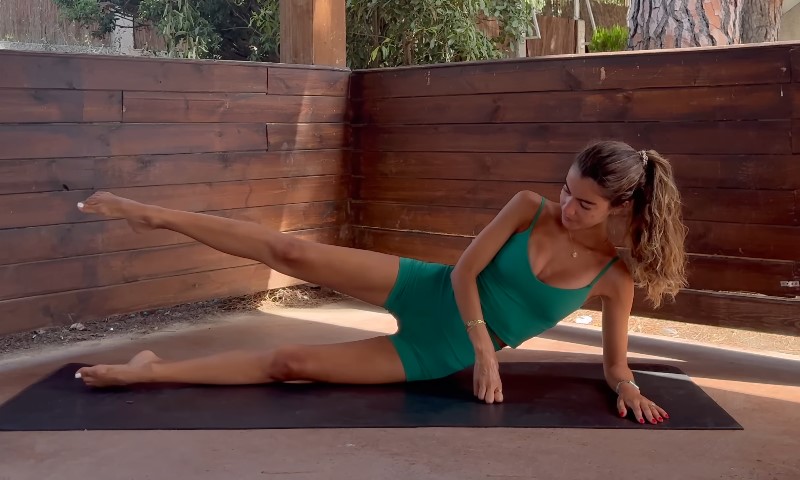
9:00 to 11:00: Side-Lying Leg Series
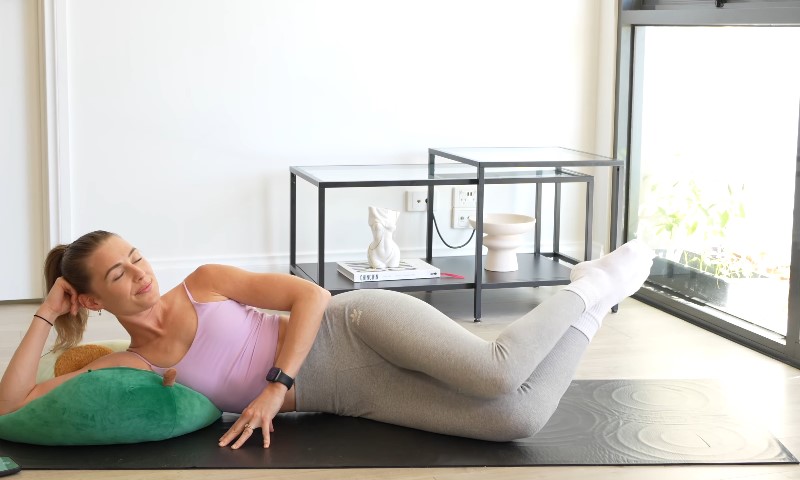
The side-lying leg series shifts focus to hip stability and controlled strength, building the kind of support that carries over into steadier walking, better balance, and smoother everyday movement.
Setup
Lie on one side with legs long and hips stacked. Top hand rests lightly on the floor.
Movements
- Top leg lift: 8 slow reps
- Small circles: 6 in each direction
- Optional clam with knees bent if straight-leg work overuses hip flexors
Switch sides halfway.
Why It Matters
Hip stability supports balance and gait. Pilates research often connects side-lying hip work with improved balance outcomes, especially in aging populations.
11:00 to 13:00: Swimming Prep
- Start Position : Lie prone with forehead resting on hands or a folded towel. Draw shoulders away from ears.
- Movement : Exhale to lift one arm and the opposite leg slightly. Inhale to lower. Alternate for 6 to 8 controlled lifts.
- Modification : Lift arms or legs only if lower back sensitivity shows up.
- Why It Matters : Posterior chain work supports posture and trunk endurance. Controlled extension counters daily sitting patterns and promotes muscular balance.
13:00 to 15:30: Plank Pattern for Home Practice
Choose the version that allows clean alignment.
Incline Plank
Hands on a couch or sturdy surface. Body stays in one line. Hold 20 seconds, rest 10 seconds, repeat once.
Floor Plank
Hands under shoulders. Hold 15 to 25 seconds, repeat once.
Form Cues
Push the floor away, keep ribs drawn down, lightly engage glutes.
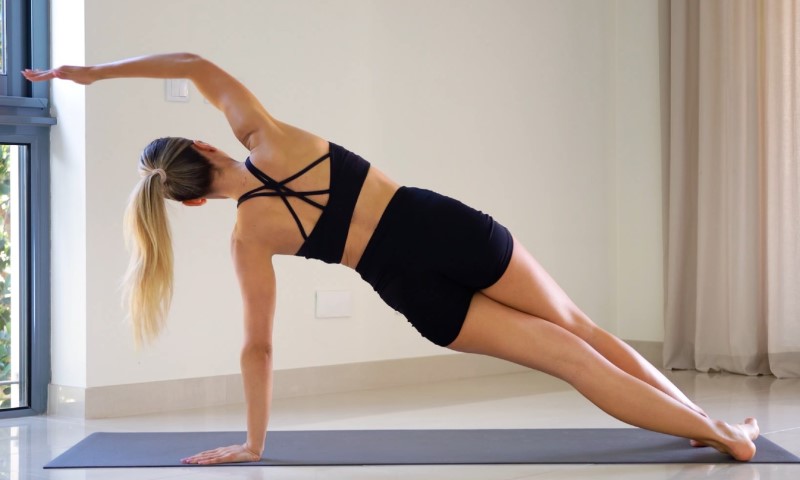
15:30 to 18:00: Side Plank With Short Lever
- Setup : Lie on side with elbow under shoulder and knees bent.
- Movement : Exhale to lift hips. Hold 15 to 20 seconds. Inhale to lower. Repeat once per side.
- Why It Matters : Lateral stability supports balance and controlled movement. Pilates programs frequently emphasize side work for trunk and hip coordination
18:00 to 20:00: Spine Stretch and Hip Opener
- Spine Stretch Forward : Sit tall with legs comfortably apart or knees bent. Exhale to round forward slowly. Inhale to stack back up. Perform 4 reps.
- Figure-4 Hip Stretch : Lie on back, cross ankle over opposite knee. Hold 30 seconds per side.
Scaling the Routine for Different Goals
View this post on Instagram
General Fitness and Posture
Perform the routine 3 to 4 days per week. Add walking or cycling on other days to move toward weekly activity targets recommended by global health organizations.
Core Strength and Balance
- Add 10 seconds to each plank hold weekly until reaching 45 seconds
- Include one extra round of side-lying leg work
- Slow tempos and fewer reps with precise control
Balance-focused training supports steadier movement as people age, a point highlighted repeatedly in Pilates research and clinical summaries.
Back Comfort and Resilience
- Emphasize bridges and toe taps
- Keep flexion conservative early on
- Use small ranges during swimming prep
Systematic reviews report reductions in pain and functional limitation with Pilates-based programs for low back pain when programs stay well-designed and consistent.
Common Mistakes That Limit Progress at Home
- Rushing for Burn : Speed often shifts stress into the neck, hip flexors, and lower back.
- Forcing Pelvic Tuck : A slight tuck can help find control, but forcing it constantly may irritate the spine and shut down glute engagement.
- Shrugging Shoulders : If shoulders creep upward, reduce load or move to incline variations.
Weekly Structure Example
A simple weekly layout keeps things realistic:
- 2 to 4 days: 20-minute Pilates routine
- 2 to 5 days: 20 to 40 minutes of brisk walking or cycling
- 1 day: light mobility only
Consistency and total weekly movement volume drive results more than intensity spikes.