
Professional success in sport often looks effortless on television, yet long preparation sits behind every elite performance.
Conversations about youth training usually circle one question: how early should a child train to reach the highest level? Two competing paths dominate that discussion.
One path pushes intense, year-round focus on a single sport during childhood.
Another path favors broad athletic exposure, play, and gradual narrowing of focus during adolescence.
Stakes remain high because youth injury rates continue to rise, burnout appears earlier than ever, and free play steadily disappears.
Early vs. Late Specialization – What Does Science Say?
Debate around specialization timing shapes nearly every youth sport pathway.
Coaches, parents, and athletes often feel pressure to commit early, yet scientific evidence paints a more complex picture.
Long-term athletic success depends less on early intensity and more on how physical, cognitive, and emotional systems develop over time.
Risks of Early Specialization
Early specialization increases physical stress during years when bodies remain highly vulnerable.
Repetitive movement patterns, limited recovery, and year-round schedules place excessive load on developing joints, tendons, and growth plates. Research consistently links these patterns to higher injury rates.
Data drawn from youth sport injury research shows several clear trends once specialization occurs before age 12:
- Youth tennis players specializing before age 10 reported a 1.5 times higher injury rate in a study involving 530 high-level athletes
- Overuse injuries appeared most often in volleyball and soccer players aged 13 to 16, training year-round
- Injury patterns shifted away from contact trauma toward chronic tendon and growth-related issues
Psychological strain grows alongside physical risk. Narrow training environments reduce opportunities for creative movement and adaptive problem-solving.
Athletes learn one solution repeatedly instead of developing multiple responses to changing situations.
Pressure to win, secure roster spots, and justify financial or emotional investment often replaces enjoyment. Motivation fades early, and burnout frequently appears years before peak performance potential.
Benefits of Sport Sampling
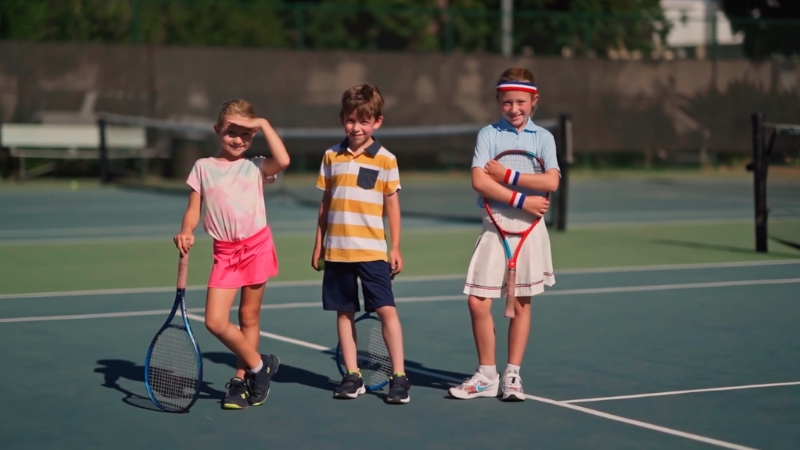
Sport sampling supports broad athletic development during critical childhood years.
Exposure to multiple movement systems builds coordination, balance, spatial awareness, and timing across varied contexts.
Neural development benefits as the brain learns to process information under different physical demands.
Research comparing single-sport and multi-sport athletes reveals measurable performance advantages that extend into later adolescence:
- Improved landing mechanics that reduce knee and ankle injury risk
- Greater motor control during rapid direction changes
- More efficient neural processing measured through virtual reality decision-making tasks
Skill transfer explains many elite success stories.
Patrick Mahomes developed spatial awareness and vision through basketball while refining throwing mechanics through baseball, skills that later translated directly to football performance.
View this post on Instagram
Jannik Sinner credits his early years skiing for body control, balance, and mental composure that shaped his tennis career.
Mental resilience also develops naturally. Different sports present different rules, teammates, environments, and failure patterns.
Athletes learn to adapt, reset after mistakes, and solve problems under changing conditions rather than relying on a single familiar structure.
Scientific Findings on Starting and Specialization Ages
Large-scale data clarifies how elite athletes actually develop rather than how youth systems often operate.
Analysis of 2,838 Olympic-level athletes across 44 sports reveals wide variation in developmental timelines.
Key numerical findings reveal consistent patterns across countries and disciplines:
- Average starting age measured 10.6 years with a standard deviation of 5.3
- Average specialization age reached 15.6 years with a standard deviation of 5.0
- Sport sampling lasted roughly 4.9 years on average
- Moderate correlation existed between starting and specialization ages at r = 0.639
Results show early participation does not require early commitment.
Many athletes began sports young but delayed specialization until mid to late adolescence.
No single age predicted success across sports, reinforcing the importance of individualized development paths.
Developmental Timeline for Athletic Training
Athletic preparation works best when aligned with biological and emotional development rather than competitive calendars.
Ages 2 to 6
Early childhood focuses on movement, joy, and basic skill acquisition.
Swimming, playground play, tumbling, and hand-eye coordination games build:
- Breathing control
- Balance
- Confidence
Unstructured play two to three times per week lowers injury risk and builds physical literacy.
Ages 3 to 6
Light exposure to organized activities supports social learning without pressure.
Gymnastics once per week enhances body awareness and flexibility. Rock climbing develops grip strength and coordination.
Casual soccer supports aerobic capacity and cooperation.
Ages 6 to 9
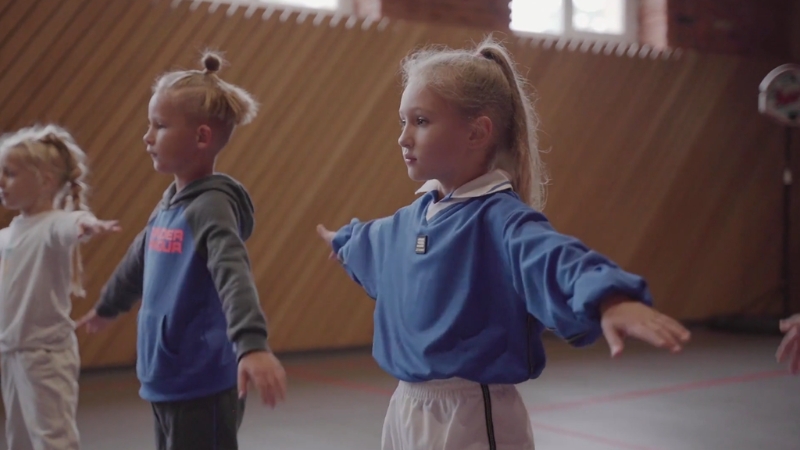
Variety expands during early school years.
Conditioning appears through jumping, sprinting, and lifting light objects.
Exposure to new sports one to two times per week sustains motivation. Emotional connection to movement strengthens rapidly during this stage.
Ages 9 to 12
Structure increases while variety remains intact.
Track and field one to three times weekly, triathlon with focus on swimming and cycling, seasonal team sports, and hand-eye coordination sports like regular tennis lessons fit well.
Conditioning becomes more organized yet stays game-based. Physical differences begin emerging, making exploration critical.
Ages 12 to 15
Adolescence introduces a gradual narrowing. Training intensity increases while respecting skeletal maturity.
Weekly schedules often combine one primary sport session, continued hand-eye sports, and structured conditioning using complex movement patterns.
At least one non-competitive activity per week protects motivation and mental health.
Age 15 and Older
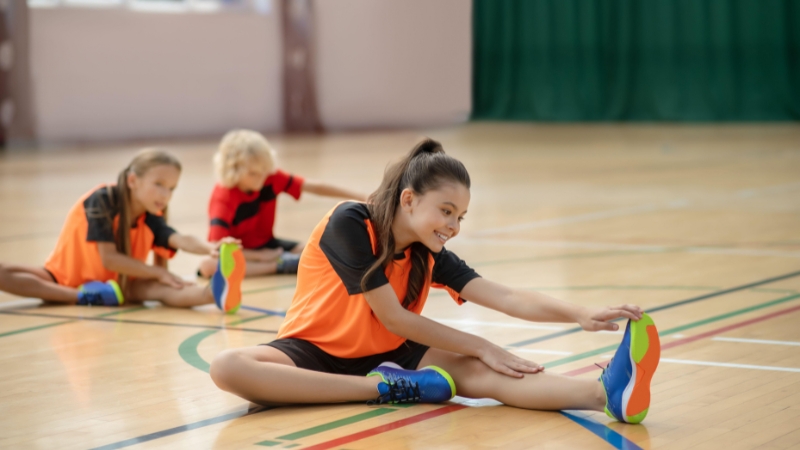
Full specialization aligns best after physical growth and emotional readiness stabilize.
Training shifts toward sport-specific demands while general conditioning remains essential to manage load.
Years of varied preparation allow athletes to tolerate elite training safely and consistently.
Sport-Specific Development Models
Different sports demand different timelines. Five broad categories emerge.
Early specialization sports include gymnastics and figure skating. Technical mastery must develop before puberty to reach elite levels.
Intermediate start and specialization sports include tennis and swimming. Participation often begins around ages 8 to 10, while specialization typically occurs between ages 13 and 15.
Late specialization sports include soccer, basketball, and American football. Athletes often start young but commit fully after age 15.
Late-starting sports such as rowing and shooting allow elite performance even when formal participation begins around age 12 or later.
Late-starting and late-specialization sports include track, cycling, and certain endurance disciplines, where adult physiological development outweighs early technical demands.
Cultural Pressures and Long-Term Implications
From @TheAthletic: American kids spend twice as much time in organized sports as playing for fun. Many parents fear that their children will fall behind if they don’t specialize in a sport early. But research argues otherwise.https://t.co/trDccN1qgx pic.twitter.com/iYo8JwzEwS
— The New York Times (@nytimes) September 11, 2025
Organized sport now dominates childhood schedules. American children spend twice as much time in organized sports as in unstructured play.
Reduced free play correlates with higher injury rates and lower creativity.
Parental fear drives early specialization. Many families worry that children will fall behind without year-round training. Research repeatedly contradicts that belief.
Early success fails to guarantee adult excellence.
Short-term athlete development can produce dominant youth performers while increasing burnout and injury risk.
Numerous elite athletes, including Patrick Mahomes and Jessica Pegula, achieved success through later specialization and broad athletic backgrounds.
Summary
@overtimeathletesAT WHAT AGE SHOULD MY KID START TRAINING? When you say “train” parents immediately think the child will be squatting with a bar on their back and “stunt their growth”. While that’s a myth in itself the greater problem is realizing that’s not necessarily the primary goal. – Physical development should be consistent since the time they are born. When they get to the ages 6-7 it’s a good time to start introducing some stress to the body in the form of fundamental primal patterns. – Kids should be sprinting, jumping, throwing, pushing, pulling, lunging, squatting, bending, and rotating. These are all fundamental patterns they can be exposed to with various forms of resistance that does not compromise them but rather amplifies their ability to move in space. – So the question shouldn’t be what age should your child start to “train”… but rather what’s your definition of training and how are you doing it? – Take my word for it and watch your kid excel.♬ original sound – OvertimeAthletes
No single age guarantees professional success.
Effective development follows a clear pattern: early years focus on movement rather than competition, childhood rewards variety, and adolescence allows specialization aligned with readiness.
Sport-specific demands matter, yet athlete well-being matters more.
Building a complete athlete first creates a stronger foundation for future specialization. Fun, fundamentals, and fitness lead naturally to peak performance later on.