
Martial arts offer women powerful tools for confidence, fitness, and real self-protection.
Many martial arts focus on timing, leverage, and precision over raw strength, which aligns with female physiology and natural advantages such as flexibility and endurance.
At the same time, the training process also builds mental resilience, sharper reflexes, and stronger situational awareness.
Now, we will present you with effective options suited to different goals and personalities.
1. Krav Maga
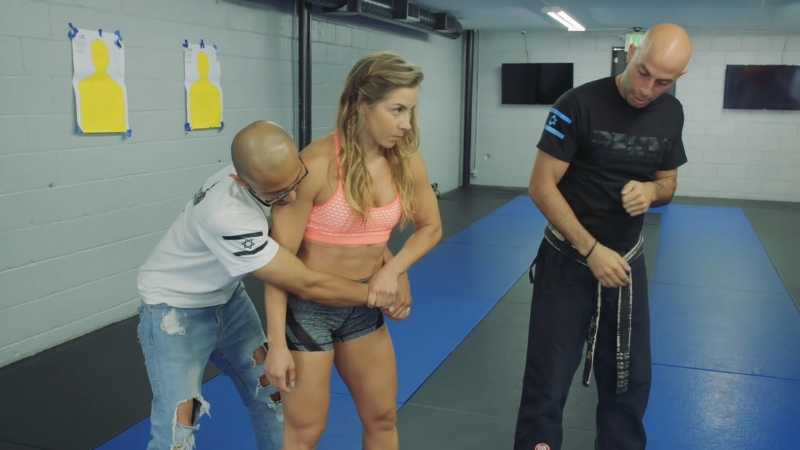
Krav Maga began as a combat system for Israeli forces before adapting for civilian use.
Training focuses on fast reactions, high-pressure situations, and survival against sudden attacks.
Techniques aim to end conflicts quickly with decisive movements.
Advantages of Krav Maga for Women
Women benefit from skills that do not depend on size or strength. Strikes aimed at the eyes, throat, and groin create immediate chances to break free.
Realistic scenario drills mirror grabs, chokes, and holds that women commonly face, helping build sharp instincts and quick decision-making.
Constant exposure to pressure-based training also reduces hesitation during unexpected confrontations.
Core Training Elements and Drills
Training encourages instinctive reactions that surface naturally under stress.
Students practice defending and counterattacking in one fluid motion, which increases efficiency and reduces reaction time.
Simulated assaults recreate the shock and intensity of real conflict, helping women develop mental resilience and learn to stay composed.
Partner drills, pad work, and verbal command training reinforce clear, confident responses.
2. Brazilian Jiu-Jitsu
Brazilian Jiu-Jitsu focuses on leverage, ground control, and submissions.
Smaller practitioners succeed because well-timed technique consistently defeats raw force.
Many women appreciate the strategic nature of each position and the focus on patience mixed with precision.
Key Benefits of BJJ for Female Practitioners
BJJ equips women with tools that protect them during ground situations, which are common in real attacks.
Positions such as guard use leg strength and flexibility to restrain or off-balance a heavier opponent.
Women-only classes offered in many gyms provide comfortable learning environments and supportive coaching structures.
Progress comes steadily as technique sharpens through repetition.
Technical Focus Areas and Skill Development
Training teaches women how to remain calm while pinned or held. Escapes build confidence in tight spaces, while chokes and joint locks improve precision and timing.
Sweeps focus on controlled transitions that shift momentum safely and effectively.
For added joint protection during high-pressure drills, many practitioners explore more stabilizing knee braces like the anaconda knee brace.
Designed specifically for grappling sports, it features multi-angle support straps, gel padding for impact absorption, and a no-slip design that stays secure through intense rolls, offering compression that supports both injury prevention and recovery.
3. Muay Thai
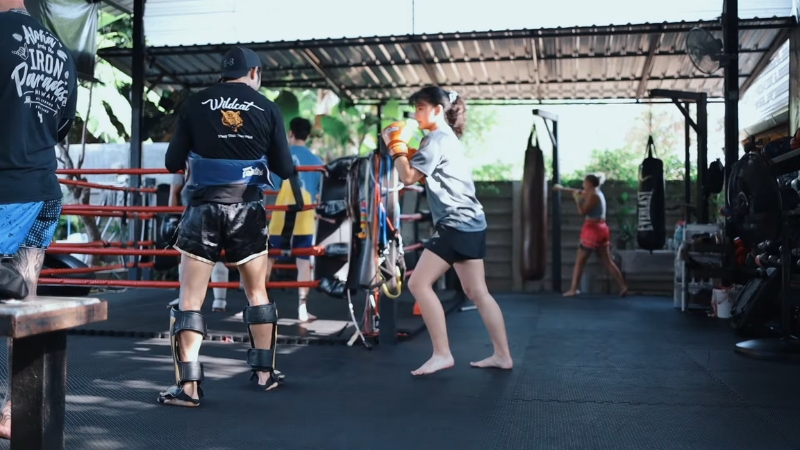
Muay Thai uses punches, kicks, elbows, and knees, creating a striking system that strengthens the entire body.
Workouts develop endurance, power, and discipline through continuous drilling and pad work.
How Muay Thai Empowers Female Students
Women gain strength and confidence as training improves:
- Posture
- Balance
- Aggression control
Close-range strikes, such as elbows and knees, give practical tools for self-defense.
Footwork drills sharpen coordination and reaction speed.
Conditioning boosts stamina, contributing to a stronger sense of self-assurance during both training and daily life.
Essential Muay Thai Training Components
Training begins with fundamental punches and kicks that build technique step by step.
Combination drills improve timing and allow students to link movements with accuracy.
Clinch work enhances control during close contact, teaching women how to maintain balance and create openings for strikes or escapes.
Regular pad sessions raise power output and reinforce strong mechanics.
4. Judo
View this post on Instagram
Judo relies on leverage, balance disruption, and timing to execute throws and pins.
Strength is secondary to this technique, making it suitable for practitioners of all body types.
Why Judo Suits Women of All Body Types
Women often excel at hip throws and grip sequences, thanks to strong coordination and a low center of gravity.
Judo teaches effective counters to grabs and holds, which appear frequently in close-range confrontations.
Confidence grows as students learn how to control an opponent’s structure using minimal effort.
Foundational Judo Skills and Throwing Practice
Training begins with safe falling practice to protect joints and reduce fear of impact.
Core throws such as O Goshi and De Ashi Barai develop fluid hip and foot mechanics.
Ground transitions teach control after throws, allowing practitioners to pin an opponent and maintain dominance.
Grip fighting sharpens timing and awareness during stand-up exchanges.
5. Wing Chun
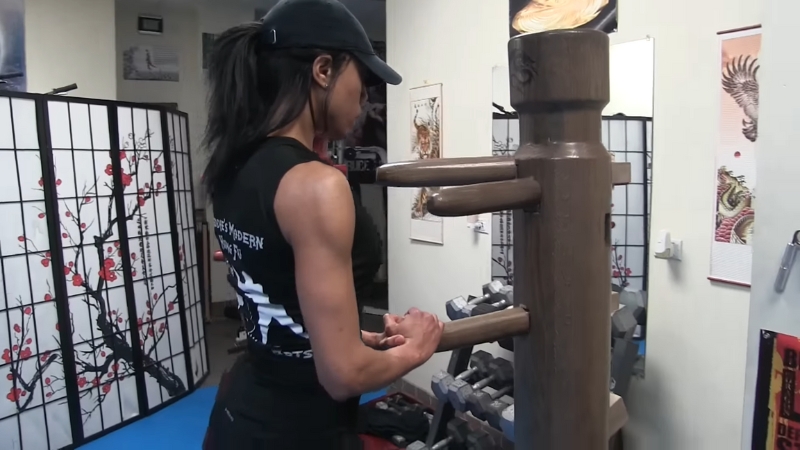
Wing Chun uses straight-line attacks, rapid-fire punches, and compact movement.
Reflexes and efficiency form the foundation of every technique, creating a style that rewards smart positioning over strength.
Wing Chun’s Practical Advantages for Women
Women benefit from a system built to overcome larger attackers, using speed and precision instead of force.
Low kicks and fast punches fit well in tight areas such as:
- Elevators
- Narrow corridors
Centerline protection keeps vital targets covered, helping women respond quickly during sudden threats.
Skill-Building Drills and Sensitivity Training
Training develops rapid chain punching aimed at disrupting an attacker’s rhythm. Low kicks support balance and stability while targeting weak points.
Sensitivity drills such as Chi Sau improve touch-based reactions and help practitioners read pressure changes instantly.
Footwork patterns refine positioning, allowing women to move smoothly and stay protected during shifts in distance.
6. Aikido
@bestofsports05 #aikido #aikido_techiniques #aikidomartialarts #bestsport #fyp #foryou #aikidowomen #aikidotechniques #movie ♬ I Can Feel It v3 – Nick Sena and Danny Echevarria
Aikido teaches redirection, joint control, and circular movement.
Conflict resolution focuses on neutralizing aggression without relying on impact or brute force.
Why Aikido’s Philosophy Supports Female Learners
Women learn to use fluid motion to guide an attacker’s momentum instead of resisting it. Joint locks and turning steps reduce the need for physical strength.
Calm movement helps practitioners maintain clarity and control in stressful moments, lowering tension.
Principles of Movement, Redirection, and Control
Training focuses on entries such as Irimi and Tenkan that allow practitioners to intercept and redirect incoming force.
Circular motion teaches off-balancing skills that reduce an aggressor’s stability.
Falling practice builds confidence during rolls and throws, while center-of-gravity awareness improves posture and stability in all techniques.
7. Taekwondo
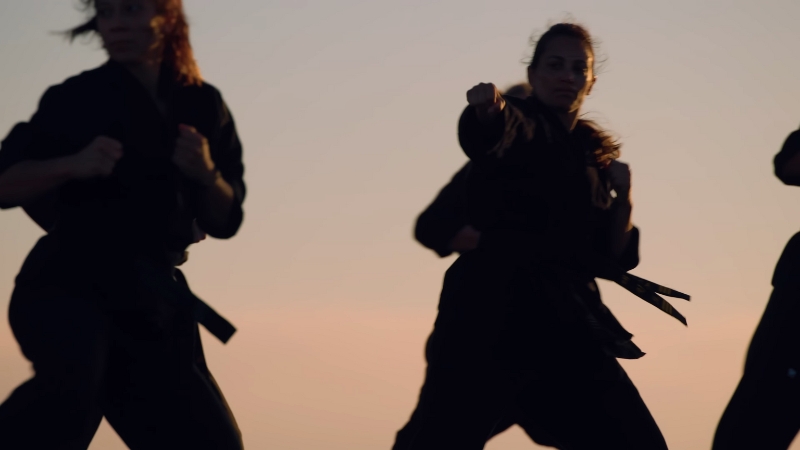
Taekwondo is a martial art that focuses on powerful kicks, fast movement, and athletic sparring.
Leg techniques are central, providing long-range tools to manage distance. Therefore, nobody should be surprised that there are many women interested in this sport.
Female-Friendly Strengths of Taekwondo
Women often develop powerful kicks quickly, creating an effective way to keep an attacker at bay.
Coordination and footwork improve steadily through repetitive drills.
Flexibility increases over time, reinforcing both form and self-protection skills.
Kicking Fundamentals and Sparring Development
Training includes front kicks, side kicks, and spinning variations that build precision and control.
Sparring sharpens timing and teaches women to read movement patterns.
Conditioning drills strengthen legs and improve agility, helping practitioners maintain balance and quick reactions under pressure.
8. MMA
View this post on Instagram
MMA combines boxing, Muay Thai, wrestling, and Brazilian Jiu-Jitsu to create a balanced combat system that prepares students for every range.
Because it includes both striking and grappling, it teaches students how to respond effectively, whether a person is:
- Standing
- Clinching
- On the ground
The Adaptive Nature of MMA for Women
Women develop adaptability as they learn to shift between striking, clinching, and grappling. Confidence grows through exposure to real situational training.
Many gyms offer safe entry-level programs designed for technique development and structured progression.
Training Methods Across All Ranges
Training includes smooth transitions between striking and grappling phases, helping students remain effective at any distance.
Drills simulate real confrontations and encourage problem-solving under pressure.
Both recreational and competitive paths are available, allowing women to choose intensity levels that match personal goals.
Closing Thoughts
Martial arts give women physical protection, sharper awareness, and powerful confidence.
All styles offer useful benefits, ranging from grappling control to powerful striking to non-aggressive redirection.
Personal goals, comfort level, and training environment matter most when choosing a starting point.
A single class is enough to begin building skill and self-assurance.