

Achy knees, sore hips, stiff ankles, back discomfort, arthritis, and past injuries can make exercise feel intimidating.
Many people want better fitness, more strength, and easier movement, but high-impact workouts can aggravate pain or create extra stress on sensitive joints.
Joint-safe workouts focus on movement that raises heart rate, builds muscle, or improves mobility while limiting hard impact on knees, hips, ankles, shoulders, and the spine.
Low-impact exercise can still be challenging and effective, but it avoids repeated pounding caused by running, jumping rope, burpees, and many intense HIIT moves.
Consistency matters more than intensity at first.
1. Walking – Best Everyday Low-Impact Cardio

Walking is one of the simplest joint-safe workouts because it requires no gym, no special equipment, and no complicated technique.
Nearly anyone can start at a comfortable pace and adjust distance, speed, or terrain over time.
Flat, even, or softer surfaces can make walking gentler on the knees and hips. Smooth steps and supportive shoes can also reduce extra strain.
Over time, walking helps strengthen muscles that support the joints, especially in the legs, hips, and core.
People dealing with stiffness may also find walking helpful because steady movement encourages circulation and keeps joints moving through a natural range of motion.
Short walks done often can be easier to maintain than long, intense workouts done rarely.
- Start with 10 to 15 minutes at an easy pace.
- Choose supportive shoes with cushioning and a good fit.
- Keep posture upright, shoulders relaxed, and steps smooth.
- Pick flat sidewalks, tracks, treadmills, or softer paths when possible.
- Add time or speed gradually rather than making sudden jumps.
Walking works well as a daily habit, especially for beginners, older adults, and anyone returning to exercise after a break.
2. Yoga and Tai Chi – Best for Mobility, Balance, and Stiffness
Joint health is not only about cardio. Mobility, balance, flexibility, and body control also matter.
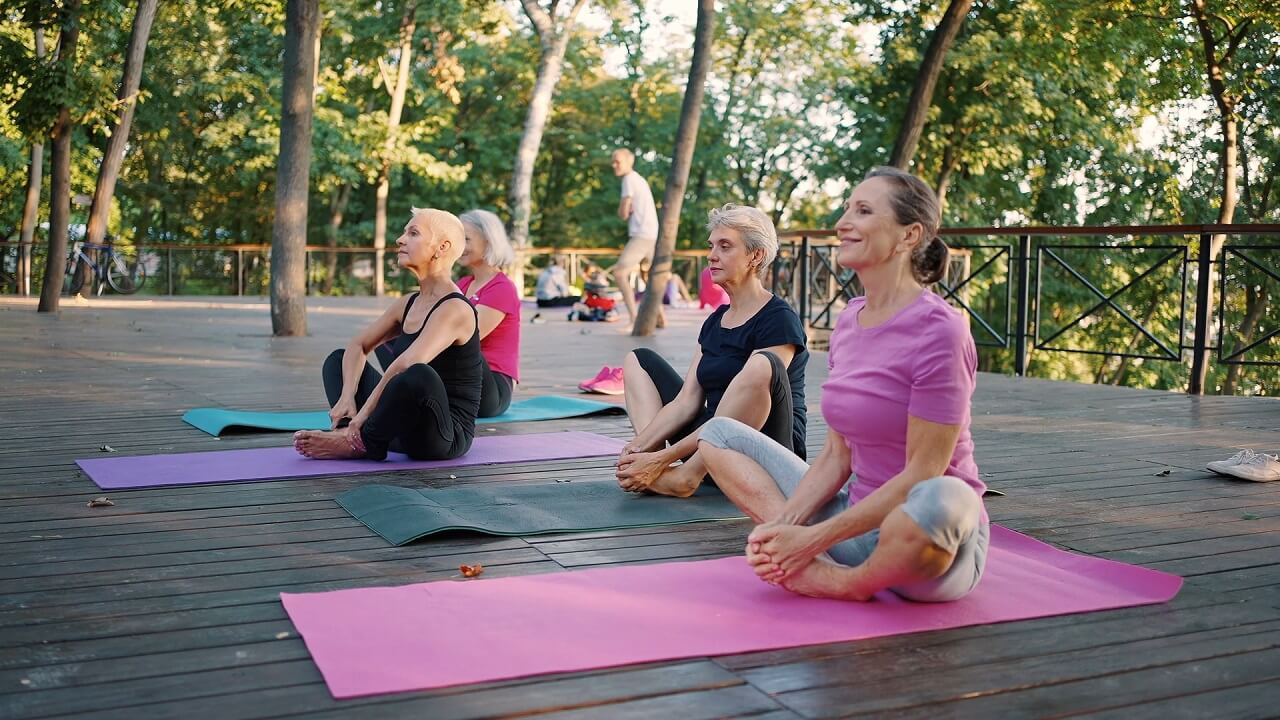
Yoga and tai chi use gentle, controlled movement that can help people move better and feel less stiff.
Yoga can improve flexibility, range of motion, posture, breathing, and body awareness. Tai chi uses slow, flowing movement that supports balance, coordination, and control.
Both can be helpful for people who want lower-intensity movement with joint-friendly benefits.
Gentle routines may also reduce stress, which can help people feel more relaxed during exercise.
People with arthritis may also benefit when movement support is paired with daily help at home, especially when pain, fatigue, inflammation, or reduced mobility make routine tasks harder.
For readers who need extra support, professional arthritis care at home can include personal care, practical help, companionship, and a tailored support plan designed around daily needs.
For people with arthritis or stiffness, slow movement can make activity feel more manageable.
- Choose beginner, gentle, chair, or arthritis-friendly classes.
- Avoid forcing deep stretches.
- Use blocks, chairs, straps, or cushions for support.
- Move slowly and stay within a comfortable range.
- Skip poses or positions that trigger pain.
Yoga and tai chi work well on active recovery days, in morning mobility routines, or as part of a weekly plan focused on long-term joint comfort.
3. Swimming and Water Aerobics – Best for Painful or Stiff Joints

Swimming and water aerobics are excellent choices for people with painful, stiff, or sensitive joints.
Water buoyancy supports body weight, which reduces pressure on knees, hips, ankles, and the back during movement.
Aquatic workouts can improve heart health while also building strength. Water creates natural resistance, so muscles work during each push, pull, kick, or step.
At the same time, movement in water often feels smoother and less jarring than movement on land.
Pool workouts can also support flexibility and range of motion.
Many people with arthritis, injury recovery needs, or balance concerns prefer water exercise because it allows movement with less fear of falling or joint overload.
- Workout examples
- Swimming laps
- Water walking
- Water aerobics
- Aquatic yoga
- Aquatic tai chi
A pool setting can be especially helpful for people who want cardio but struggle with running, jumping, or fast gym classes.
Gentle water movement can still raise heart rate and improve endurance without harsh impact.
4. Cycling or Stationary Biking – Best for Knees With Less Pounding
Cycling is a strong low-impact cardio option because it is non-weight-bearing.
Feet stay connected to the pedals, so joints avoid landing forces linked to running or jumping.
Cycling can strengthen the quads, hamstrings, glutes, calves, and other leg muscles that help support the knees and hips.
Smooth pedaling may also help improve knee range of motion, especially when resistance stays light at first.
Indoor bikes give people more control over pace, resistance, and workout length.
Recumbent bikes can be especially useful for people with balance issues or back concerns because the seat offers more support.
- Adjust the seat so the knee has a slight bend at the lowest point of the pedal stroke.
- Begin with low resistance and an easy pace.
- Use flat terrain outdoors until strength and comfort improve.
- Try a recumbent bike if balance, back comfort, or stability matters.
- Avoid pushing heavy resistance too early.
Cycling can fit many fitness levels. Beginners can start with short, steady rides, while more experienced exercisers can add intervals or longer sessions as joints tolerate the workload.
5. Elliptical Training – Best Gym Cardio Alternative to Running
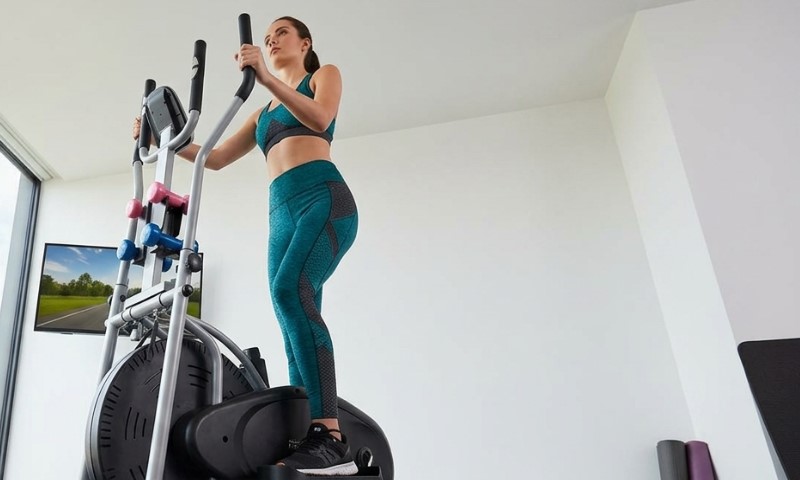
Elliptical training gives many people a cardio workout that feels similar to walking or running but with a smooth gliding motion.
Feet stay on the pedals, which reduces harsh landing forces.
An elliptical is low-impact while still being weight-bearing, meaning the body works against gravity without repeated pounding.
Heart rate can rise quickly, especially when pace, incline, or resistance increases.
Moving handles can add upper-body work, while fixed handles can help with balance.
People with knee or hip sensitivity may prefer elliptical workouts because movement is fluid and controlled.
- Start with low resistance and a comfortable pace.
- Keep posture tall and avoid leaning heavily on the handles.
- Use fixed handles when balance feels uncertain.
- Take shorter sessions at first, then add time as comfort improves.
- Stop or reduce resistance if knee, hip, or back pain increases.
Elliptical workouts can be a helpful gym option for people who miss running but need a gentler way to train cardio endurance.
6. Rowing – Best Full-Body Low-Impact Cardio
Rowing combines cardio, strength, and endurance in one low-impact movement.
Each stroke uses the legs, core, back, shoulders, and arms, making it a full-body workout without jumping or running.
A rowing machine can build endurance while limiting knee pounding. Stronger core muscles may also support better posture and spinal stability during daily activities.
Form matters with rowing. Jerky movement, too much resistance, or pulling mostly with the arms can create discomfort.
A smooth stroke pattern helps distribute effort across the body.
- Push with the legs first, brace the core, then pull with the arms.
- Keep the back tall rather than rounded.
- Use light resistance until technique feels natural.
- Move with control instead of rushing each stroke.
- Keep knees tracking comfortably and avoid forcing range of motion.
Rowing can be efficient for people who want cardio plus strength benefits in one workout. Proper setup and technique make it much more joint-friendly.
7. Pilates, Resistance Bands, and Modified Strength Training – Best for Joint Support
Strength training is important because stronger muscles help stabilize and protect joints.
Weak muscles can increase strain on knees, hips, shoulders, and the back, while balanced strength can make movement feel safer and easier.
Pilates can strengthen the core, hips, lower back, glutes, and thighs with controlled movement.
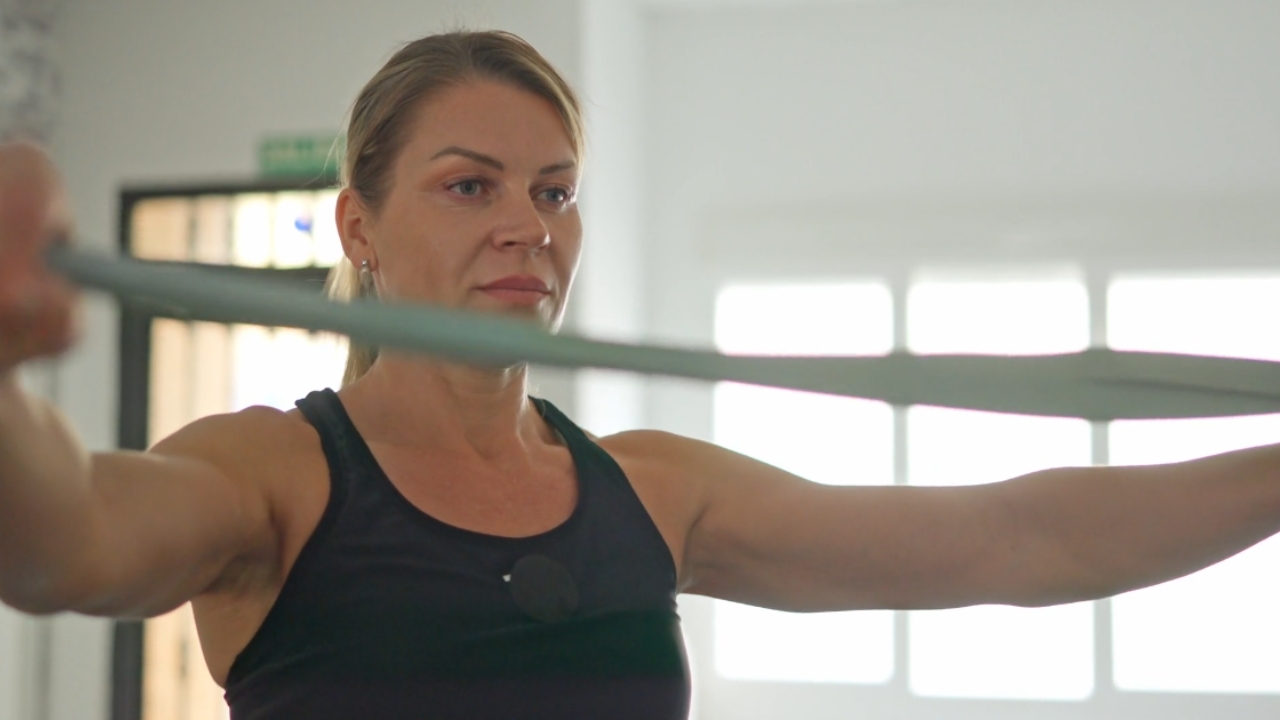
Resistance bands allow strength work without heavy loading. Modified bodyweight exercises can also support knees, hips, shoulders, and the spine when done with good form.
Joint-safe strength training should feel controlled rather than rushed. Painful ranges of motion are not required to build strength.
Small adjustments, lighter resistance, and slower movement can make exercises more comfortable and effective.
- Chair squats
- Wall push-ups
- Resistance-band rows
- Band leg presses
- Glute bridges
- Step-ups on a low platform
- Planks or side planks, when appropriate
And the most important practical tips would be:
- Use controlled movements.
- Start with light resistance.
- Avoid painful ranges of motion.
- Focus on form before adding difficulty.
Work with a trainer or physical therapist when pain, injury, or arthritis affects exercise choices.
Strength workouts can help joints handle daily activities better, especially when paired with low-impact cardio and mobility work.
How to Build a Joint-Friendly Weekly Routine
A balanced joint-friendly routine should include cardio, strength, and mobility. Each part plays a role.
Cardio supports heart health and stamina. Strength training builds muscles that protect joints. Mobility work helps maintain range of motion and reduce stiffness.
Many adults aim for 150 minutes or more of moderate aerobic activity each week. Beginners do not need to start there right away.
Short sessions of 10 to 15 minutes can build confidence and consistency. Time, speed, and resistance can increase gradually as the body adapts.
Strength training at least two days per week can support joint stability. Mobility or stretching can be done daily or several times weekly, especially for people who feel stiff in the morning or after sitting.
Progress should be slow and steady. Soreness can happen after new activity, but sharp pain, swelling, or worsening joint discomfort is a signal to reduce intensity or adjust the workout.
People with arthritis, recent injuries, major pain, or medical concerns should consider getting guidance before starting a new plan.
Summary
Joint-safe workouts can be effective, practical, and challenging without adding unnecessary pounding.
The best workout choice depends on comfort, goals, fitness level, and consistency.
A routine that feels good enough to repeat is usually more valuable than a harder routine that causes pain.
Start with low-impact movement, progress slowly, and combine cardio, strength, and mobility.